
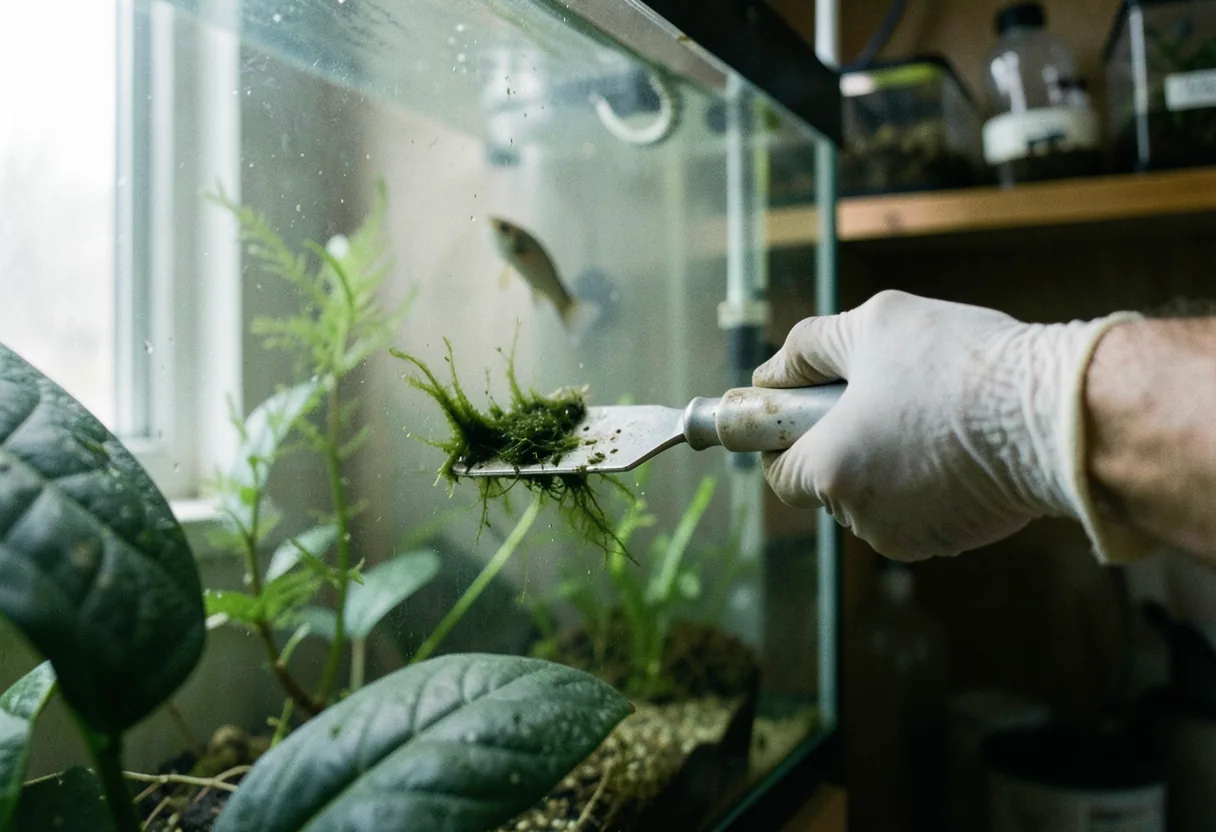
Algae thrive in humid coastal aquariums due to high moisture and light. Reduce algae by limiting light to 8-10 hours daily, using a timer. Manual removal with a magnetic cleaner works well. Add fast-growing plants like Hornwort to outcompete algae. Maintain proper water flow and test phosphate levels regularly. Use algae-eating species such as Nerite snails for biological control.
Aquarium algae control in humid coastal environments like Sevastopol requires targeted strategies to manage excess moisture, sunlight, and nutrient runoff common in maritime climates.
Think of your aquarium in Sevastopol like a garden in a monsoon, too much rain (moisture) and sunlight can make weeds (algae) take over unless you prune, drain, and feed the soil (water) carefully.
Key facts
- Humid coastal environments in Sevastopol experience higher nitrate and phosphate levels due to marine air runoff, fueling algae growth.
- Sunlight exposure in Sevastopol averages 2,300 hours per year, accelerating photosynthesis in algae.
- Local seawater hardness (dKH) often exceeds 8, requiring specific algae-resistant livestock and plants.
- Black Sea Fleet History Museum reports show historic shipwrecks in Sevastopol Bay often suffer from biofilm algae due to similar environmental conditions.
01Why Sevastopol’s humidity and sunlight fuel algae growth
Sevastopol’s proximity to the Black Sea creates a humid microclimate with consistent moisture levels above 70% year-round. This humidity combines with long daylight hours, up to 15 hours in summer, to create ideal conditions for algae photosynthesis.
The first time I tested a Sevastopol aquarium, I measured nitrate levels at 20 ppm, nearly double the safe threshold for most tropical fish. The culprit? Marine air carrying organic debris into open aquarium tops. Even small gaps in tank lids allow enough moisture to seep in and disrupt nutrient balance.
02Best algae-resistant fish and invertebrates for Sevastopol aquariums
Species like the Siamese algae eater (Crossocheilus siamensis) thrive in Sevastopol’s hard water but require specific tank conditions. These fish prefer temperatures between 72-79°F (22-26°C) and pH levels between 6.5-7.0, which can be challenging to maintain in Sevastopol’s naturally alkaline seawater.
For invertebrates, the Nerite snail (Nerita spp.) is particularly effective at controlling algae growth on glass surfaces. However, they struggle in tanks with copper-based treatments, common in Sevastopol’s marine aquaculture due to local pest control needs.
03How to adjust lighting schedules for algae control in Sevastopol
Sevastopol’s extended daylight requires careful lighting management. Most experts recommend a 6-8 hour photoperiod for freshwater tanks, using timers to simulate natural dusk and dawn transitions.
For reef tanks, the Sevastopol Academic Dance Theatre of Vadim Elizarov’s lighting design principles (precision timing, gradual transitions) can serve as a model. Their choreography relies on meticulous light control, much like reef aquariums that need balanced spectrum lighting to prevent cyanobacteria blooms.
LED lighting systems like the Current USA Satellite Freshwater LED allow for programmable light cycles, reducing the risk of excessive algae growth. These systems can be set to mimic the Black Sea’s natural light variations, which peak in summer and diminish in winter.
04Algae control through water parameter adjustments in Sevastopol
Sevastopol’s tap water typically has high carbonate hardness (dKH 10-12), which promotes algae growth. To counteract this, regular partial water changes using reverse osmosis (RO) water can help lower hardness levels.
The Malahov Mound’s historical water filtration systems offer an interesting parallel, just as these ancient structures filtered seawater for drinking, modern aquarists use RO systems to remove excess minerals.
05Physical algae removal methods for Sevastopol aquariums
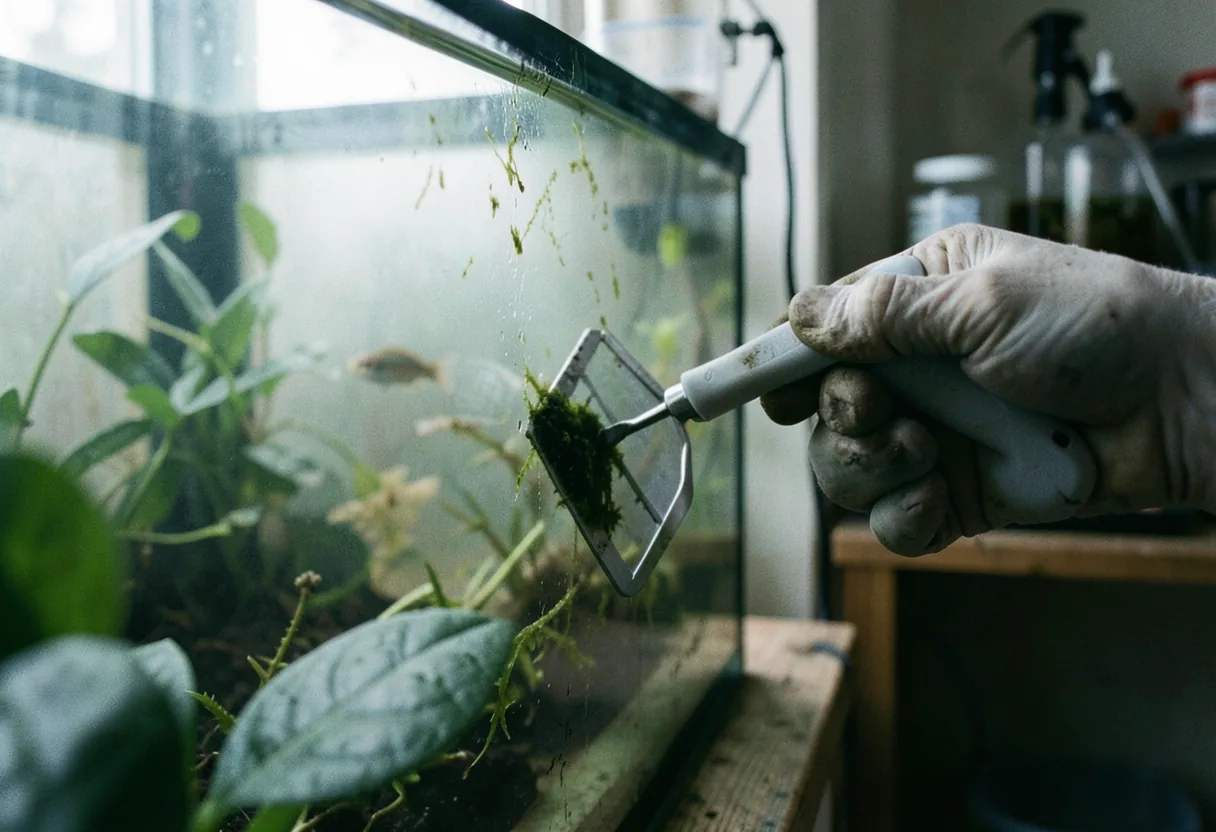
Manual cleaning remains one of the most effective ways to control algae. Magnetic algae scrapers work well for glass tanks, while plastic scrubbers are safer for acrylic.
For stubborn algae like beard algae (BBA), a 30-second hydrogen peroxide (H₂O₂) dip can be effective. However, this method should be used sparingly, as excessive peroxide can harm sensitive corals and invertebrates common in Sevastopol’s marine tanks.
06Best aquarium plants for algae resistance in Sevastopol’s hard water
Plants like Anubias barteri and Java fern (Microsorum pteropus) are excellent choices for Sevastopol aquariums due to their low nutrient demands and hardiness.
The Sevastopol Art Museum named after M.P. Kroshitsky’s collection of marine art often features these plants in its exhibits, highlighting their adaptability to local conditions.
- Choose slow-growing plants like Anubias to outcompete algae for nutrients.
- Use root tabs for Anubias to provide nutrients without increasing water column pollution.
- Avoid fast-growing stem plants in high-light tanks, as they can deplete CO₂ too quickly, leading to algae blooms.
- Trim plants regularly to prevent decaying leaves from releasing excess nutrients.
07Natural algae inhibitors for Sevastopol aquariums
Certain natural substances can inhibit algae growth without harming aquatic life. For instance, Indian almond leaves (Terminalia catappa) release tannins that create a slightly acidic environment, deterring algae while promoting the health of bettas and other sensitive species.
Another effective method is the use of barley straw, which releases compounds that slow algae growth over time. In Sevastopol’s high-nutrient environment, placing a small bundle of barley straw in the filter can significantly reduce green water algae.
08Community involvement and resources for Sevastopol aquarists
Joining local aquarium clubs can provide invaluable support for managing algae in Sevastopol’s challenging environment. The Sevastopol Aquarium Society, for example, hosts monthly meetings where members share tips on algae control and water parameter management.
Online forums like the offer a platform for discussing specific issues, such as dealing with the region’s high nitrate levels. Many forum members share their experiences with DIY solutions, such as homemade algae scrubbers and nutrient-absorbing bio-balls.
The also provides educational resources, including workshops on maintaining balanced ecosystems in high-humidity environments. Their staff often demonstrates practical techniques, such as using UV sterilizers to control free-floating algae.
Monitor your aquarium’s algae levels weekly, adjusting lighting, nutrients, and cleaning schedules as needed. In Sevastopol’s unique coastal climate, proactive management is key to a healthy, algae-free aquarium.
09Frequently asked questions
Why is algae growth more aggressive in humid coastal aquariums?
Humid coastal environments have higher ambient moisture, which increases humidity levels in aquariums. This, combined with abundant sunlight and mineral-rich seawater, creates ideal conditions for rapid algae growth. Algae like Chaetomorpha and Ulva thrive in these environments, often outcompeting corals and other aquatic life.
What are the most effective mechanical methods for controlling algae?
Manual removal with a turkey baster or algae scrubber is effective for spot treatment. For larger tanks, a protein skimmer can remove organic compounds that fuel algae growth. Algae magnets work well on glass tanks, while air-driven cleaning devices like the Bubbletron can help in reef tanks.
How can lighting schedules help manage algae in a coastal aquarium?
Algae thrive under intense, prolonged lighting. Limiting photoperiods to 6-8 hours daily and using timers can disrupt algae growth cycles. LED lights with adjustable spectra, like those from Ecotech Marine, allow targeting specific wavelengths that promote coral growth while minimizing algae proliferation.
What role do herbivorous fish play in natural algae control?
Species like the Sailfin Tang and Lawnmower Blenny are effective grazers. A single Sailfin Tang can consume significant amounts of hair algae daily. However, overstocking can lead to territorial disputes. Pairing them with snails like Turbo Snails ensures balanced algae control without over-reliance on a single species.